

Medical Waste Disposal: A Guide for Hospitals
Medical waste disposal is a critical part of hospital operations, ensuring the safety of patients, staff, and the wider community. Hospitals produce various forms of waste, including sharps, infectious materials, pharmaceutical waste, and chemical by-products. Each type of waste carries potential risks if not handled and disposed of correctly. In South Africa, regulations such as the National Environmental Management: Waste Act 59 of 2008 and the Health Care Risk Waste Regulations (2011) set clear standards to protect public health and the environment. Adhering to these laws is not only a legal obligation but a vital aspect of patient safety and workplace efficiency.
The challenge hospitals often face is ensuring all staff understand these requirements and follow proper procedures consistently. Even staff who handle medical waste daily may not fully appreciate the reasons behind every step of the disposal process. Structured training can help bridge these gaps. Hospitals increasingly use educational programmes to improve staff awareness and competence. Effective medical waste disposal relies not only on compliance but also on staff motivation and understanding of the risks and benefits of proper waste management.
Why Proper Medical Waste Disposal is Essential
Medical waste disposal is more than a procedural necessity; it is fundamental to health and safety. Improper handling can result in needle-stick injuries, infections, and environmental contamination. Sharps, contaminated materials, and expired pharmaceuticals all pose risks if not segregated and treated appropriately. South African law mandates strict compliance, making adherence a legal requirement as well as a health priority.
Effective disposal also improves operational efficiency. When waste streams are segregated correctly, collection and transportation become smoother, reducing the risk of accidents and contamination. Staff who understand why segregation matters are more likely to follow protocols consistently. Training that explains the health risks and legal requirements behind medical waste disposal often encourages staff to take compliance seriously, creating a safer hospital environment.
Key reasons why proper medical waste disposal matters:
- Reduces the risk of infections and needle-stick injuries
- Prevents contamination of the environment and hospital areas
- Ensures compliance with South African legislation
- Supports smooth and efficient waste collection and transportation
- Protects hospital staff, patients, and the wider community
- Promotes a culture of accountability and safety within the hospital
By understanding and implementing these practices, hospitals can significantly improve overall safety and reduce operational risks. Staff who are aware of the consequences of improper disposal are more motivated to follow procedures correctly.
Regular training and reinforcement help ensure that protocols are consistently followed. Highlighting the reasons behind each step, rather than only instructing staff on what to do, strengthens compliance and builds a safer hospital environment.
Types of Hospital Medical Waste
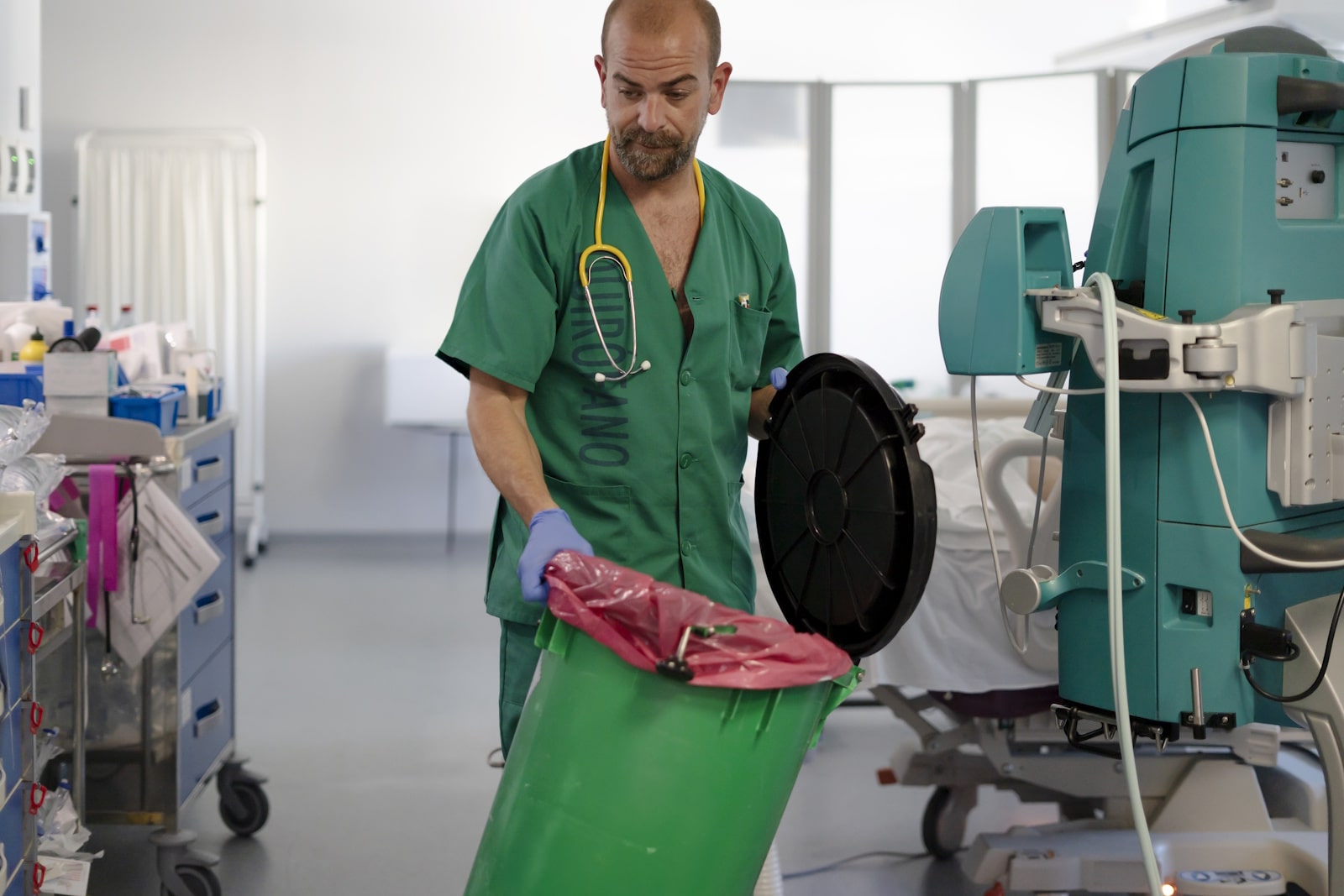
Hospitals generate several categories of waste, each with distinct handling requirements. Sharps and needles must go into puncture-resistant containers, while infectious waste, such as blood-soaked dressings, requires careful containment and labelling. Pharmaceutical waste, including expired or unused medications, and chemical waste, such as disinfectants, must be stored separately and disposed of according to specific regulations. Even general waste requires segregation to prevent contamination.
Clear understanding of these categories helps staff make informed decisions about disposal. Visual aids, examples, and practical training help reduce errors and increase compliance with South African medical waste regulations. Staff who grasp why waste is categorised in specific ways are more likely to follow safe disposal protocols consistently.
Common types of hospital medical waste:
- Sharps (needles, scalpels, broken glass)
- Infectious waste (blood-soaked dressings, contaminated materials)
- Pathological waste (tissues, organs)
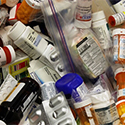
- Pharmaceutical waste (expired medications, chemical products)
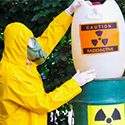
- Chemical waste (disinfectants, laboratory chemicals)
- General non-hazardous waste (paper, packaging, food waste)
Recognising the different types and associated risks helps staff act responsibly and safely. When staff understand the reasoning behind segregation and disposal rules, compliance naturally improves.
Effective training also highlights the potential consequences of mistakes, reinforcing proper behaviour. This ensures that medical waste disposal is not only a procedural task but an informed practice that protects everyone in the hospital.
Challenges in Medical Waste Management
Despite clear regulations, hospitals often face difficulties maintaining consistent practices. High staff turnover, heavy workloads, and gaps in training can lead to improper segregation, labelling errors, and accidental contamination. These issues increase the risk of infection and regulatory penalties. Addressing these challenges requires ongoing education and reinforcement of proper protocols.
eLearning and structured training can bridge knowledge gaps and improve consistency. Interactive modules and visual demonstrations allow staff to understand and remember correct procedures. Providing clear explanations of why each step is necessary rather than simply instructing staff on what to do helps motivate proper behaviour. When staff understand the real-world consequences of poor practices, adherence improves naturally, leading to safer and more efficient medical waste disposal.
Who Benefits Most from Training on Medical Waste Disposal
Understanding medical waste disposal is crucial for all hospital staff, but some roles gain particular value. Clinical staff, such as nurses and doctors, generate the majority of waste and need detailed knowledge of segregation and storage. Support staff, including cleaners and porters, handle transportation and disposal, making knowledge of safe handling critical. Administrative personnel benefit from understanding procedures and policies to ensure hospital-wide compliance.
Targeted training programmes allow hospitals to deliver role-specific content while maintaining consistency in core principles. Interactive content, quizzes, and practical case studies help staff remember important details and see the real-world application of proper disposal practices.
Hospital staff who benefit most from training:
- Nurses and doctors handling patient waste
- Support staff managing collection and transport of medical waste
- Laboratory personnel dealing with hazardous materials
- Administrative staff overseeing hospital compliance
- Cleaning and sanitation teams
- Infection control officers and supervisors
Educating these groups improves overall adherence to medical waste disposal protocols. Staff who understand the consequences of mistakes are more likely to act safely and responsibly.
Consistent, ongoing training ensures that hospitals maintain high standards. Reinforcement of key principles helps reduce errors, protect staff, and create a culture of safety and accountability.
Case Study: Using a Slideshow to Improve Medical Waste Disposal
A mid-sized hospital in Johannesburg noticed recurring issues with how staff handled medical waste. Despite working with hazardous materials daily, errors in segregation and disposal were frequent. Management concluded that staff were not fully aware of the correct procedures and that additional training could improve the situation. They decided to create a slideshow presentation to educate all staff on medical waste disposal, aiming to make processes smoother and safer.
The hospital team began by researching South African medical waste regulations, types of hospital waste, and best practices. They reviewed Health Care Risk Waste Regulations and consulted local environmental guidelines to ensure their findings were accurate and up to date. Their research revealed that while staff understood general disposal methods, knowledge gaps existed around handling pharmaceutical and chemical waste. The team also identified opportunities to improve labelling and storage practices.
Once the slideshow was ready, the hospital presented it to staff in structured sessions. The presentation included clear visuals, examples of common errors, and interactive questions to reinforce learning. Following the training, staff demonstrated improved understanding of medical waste disposal requirements. Segregation of sharps, infectious materials, and pharmaceutical waste became more consistent, and overall compliance with regulations increased. The hospital observed a noticeable improvement in the flow of medical waste management processes, reducing risks and creating a safer environment for everyone.
Best Practices for Safe Hospital Medical Waste Disposal
Safe medical waste disposal relies on clear protocols, consistent practice, and ongoing education. Staff should follow segregation rules, use correct containers, and label waste accurately. Regular refresher courses and monitoring ensure compliance and maintain high standards. Hospitals should also ensure that disposal equipment is accessible and that waste is collected and transported promptly according to South African regulations.
Understanding the reasons behind each step is key to motivating staff to follow procedures. Highlighting the potential health risks, legal consequences, and environmental hazards reinforces the importance of proper disposal. Training that combines theory with practical examples helps staff internalise safe practices. A culture of awareness and accountability ensures medical waste disposal becomes a seamless part of hospital operations.
How Training and Education Improve Compliance
Ongoing training and education are crucial to improving compliance with medical waste disposal regulations. Staff need structured learning to understand both procedures and the reasoning behind them. When staff are aware of the risks and benefits of proper disposal, they are more likely to follow protocols consistently. Reinforcing the importance of compliance ensures safer practices and protects hospital staff and patients.
Ways training improves compliance:
- Builds knowledge of legal requirements and standards
- Reinforces safe handling and segregation practices
- Improves understanding of different medical waste types
- Encourages consistent application of procedures
- Reduces risk of infection and contamination
- Promotes a culture of responsibility and accountability
Regular updates and refresher sessions maintain staff competence. Staff who are engaged and educated are more confident in handling medical waste, which supports a hospital-wide commitment to safety and compliance.
Who Offers Secure and Compliant Medical Waste Removal for Hospitals?
At A-Thermal, we provide specialised pharmaceutical waste destruction services that help hospitals stay compliant, safe, and environmentally responsible. We manage a broad range of pharmaceutical waste, including expired and discontinued finished products, intermediate products, raw materials, quality assurance retention samples, natural, homeopathic, and complementary medicines, clinical trial materials, lab waste from pharmaceutical manufacturing, medical devices, and cosmetic waste. Each of these categories is carefully monitored and processed under the supervision of a full-time pharmacist to ensure full compliance with South African legislation. This careful oversight ensures hospitals can rely on us to handle their pharmaceutical waste securely, reducing risk and maintaining strict adherence to regulations, while providing an environmentally responsible approach to disposal.
Our medical waste treatment and disposal services complement this by offering hospitals safe and effective ways to manage health care risk waste. We provide two main treatment options: burn technology, where waste is incinerated at high temperatures and flue gases are cleaned before release, and non-burn technology using autoclaving for most medical waste, excluding anatomical waste. Each treatment is tested for sterilisation, and infectious and sharps waste, gloves, masks, and isolation waste are fully decontaminated. By offering both treatment options and adhering to strict monitoring procedures, we ensure hospitals have a reliable, compliant, and environmentally responsible partner for managing all types of medical and biohazardous waste, helping them maintain safe and legal waste disposal practices.
A-Thermal: Experts in Medical Waste Management
Medical waste disposal is essential to hospital safety and efficiency in South Africa. Proper handling, segregation, and disposal of hazardous materials protect staff, patients, and the wider community. Comprehensive training and educational programmes ensure staff understand and consistently apply these practices, improving compliance and overall safety.
By investing in structured training and working with experienced waste management specialists, hospitals can strengthen their medical waste disposal processes and reduce risk across their facilities. If you are looking to improve compliance, safety, and confidence in how hospital medical waste is managed, we encourage you to get in touch with A-Thermal. Our team is ready to support healthcare facilities with secure, compliant, and environmentally responsible medical waste solutions.