

Recycling Single-Use Plastics from IV Bags and Syringes
In the bustling corridors of hospitals worldwide, a silent crisis unfolds. Each year, healthcare generates an estimated 15 million tonnes of plastic waste, with single-use items like IV bags and syringes contributing a significant portion. This figure, equivalent to over seven full shopping centres worth of material, underscores the urgency of rethinking disposal practices. In South Africa alone, where healthcare facilities produce thousands of tonnes of such waste annually, the environmental toll is mounting. Yet, amid this challenge lies opportunity: innovative recycling could transform medical waste into valuable resources, reducing landfill burdens and curbing pollution.
This blog delves into the intricacies of recycling single-use plastics from IV bags and syringes, from their polymer makeup to decontamination hurdles, chemical recycling breakthroughs, regulatory landscapes, practical applications, and environmental gains. Drawing on recent advancements and real-world examples, we explore how medical waste companies are leading the charge towards a circular economy in healthcare. By the end, you will see why action now is essential for a greener future.
Understanding the Polymer Composition and Material Challenges
IV bags and syringes are engineering marvels designed for safety and efficacy, but their durability poses recycling conundrums. Primarily crafted from medical-grade polyvinyl chloride (PVC) for IV bags, which provides flexibility through additives like plasticisers, and polypropylene (PP) or polyethylene (PE) for syringe barrels and plungers, these plastics boast high purity levels exceeding 99.9%. However, contamination from biological residues such as blood or saline complicates the process.
The chemical properties of these materials demand specialised sorting to isolate contaminated batches, ensuring no cross-pollution. PVC’s chlorine content, for instance, can degrade mixed recycling streams, while additives may leach during reprocessing, falling short of stringent standards. Medical waste companies recognise these issues, often employing density-based separation techniques to maintain integrity. A 2025 study highlights that without such measures, recyclability drops by 20 to 30%, exacerbating waste volumes.
In South Africa, where the National Environmental Management: Waste Act (NEM:WA) mandates proper segregation, these challenges are amplified by resource constraints in rural facilities. Leading medical waste companies are addressing this by investing in on-site audits, helping hospitals identify recyclable streams early. The result? A more efficient pathway to compliance and sustainability.
Decontamination and Pre-Processing: The First Line of Defence
Before any plastic sees a recycler, it must be rendered safe. Decontamination targets biohazards without compromising the polymer structure, using methods like autoclaving at 121 degrees Celsius for steam sterilisation, chemical washes with biodegradable solvents, or UV-C irradiation to eliminate pathogens. These techniques achieve up to 99% residue removal, crucial for items like saline-filled IV bags.
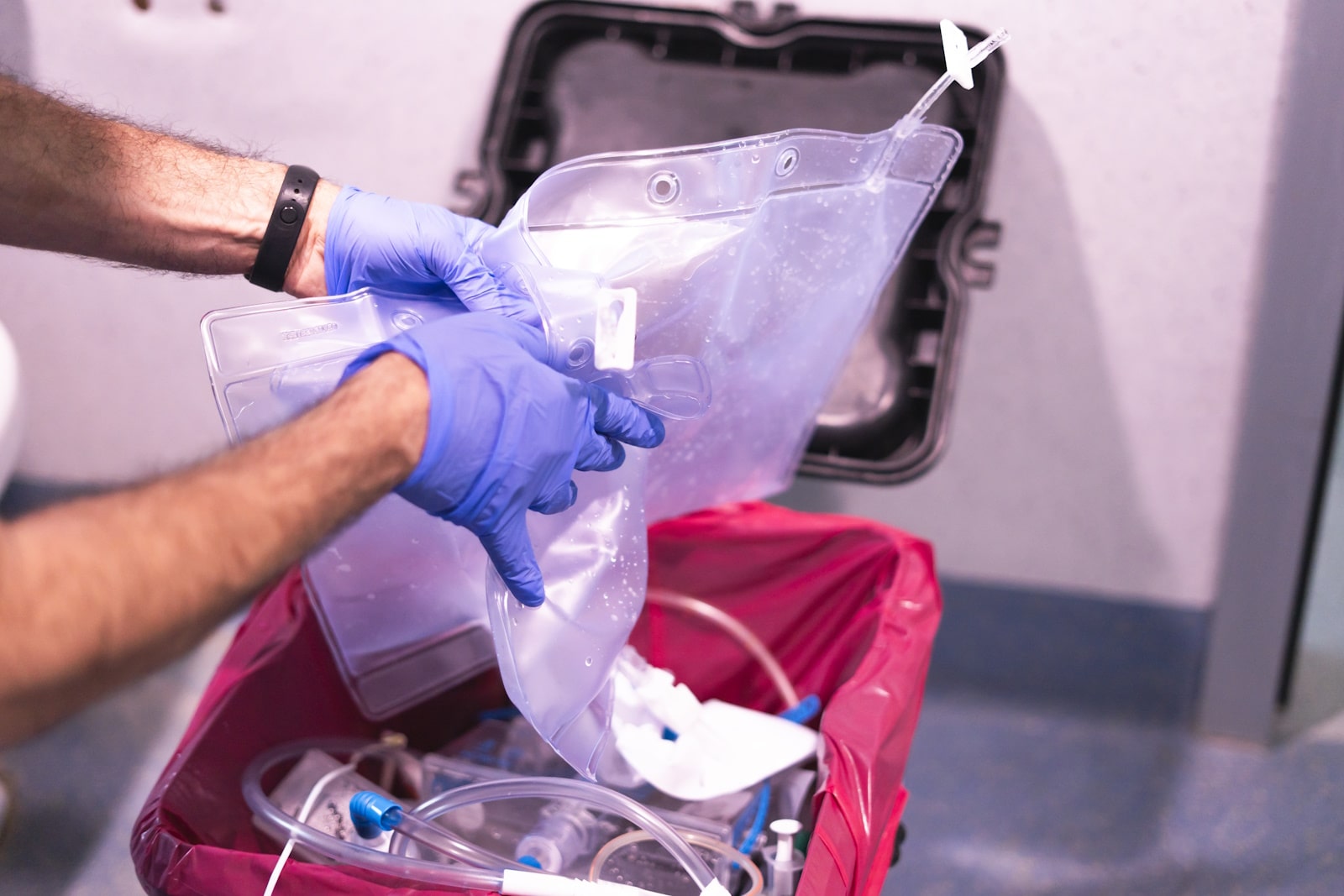
Pre-processing follows, involving shredding into granules under five millimetres and granulation to reduce volume. Worker safety is paramount, with personal protective equipment mitigating aerosol risks during shredding. Medical waste companies play a pivotal role here, providing transport and initial treatment compliant with South African guidelines under the Department of Forestry, Fisheries and the Environment (DFFE).
Consider the energy savings: autoclaving preserves PVC chains better than harsher chemicals, cutting reprocessing energy by 15%. Yet, cross-contamination remains a risk, particularly in high-volume settings. By partnering with certified medical waste companies, facilities can streamline these steps, turning potential hazards into recoverable assets.
Chemical Recycling: Fueling the Circular Economy
Mechanical recycling falters with contaminated medical plastics, but chemical methods offer a lifeline. Pyrolysis, heating materials to 400 to 600 degrees Celsius in oxygen-free environments, breaks down PP syringes into oil feedstock with 70 to 80% yields. Depolymerisation similarly converts PVC IV bags to monomers for virgin-like polymers.
Recent 2025 advancements, such as enzyme-based deconstruction from the National Renewable Energy Laboratory, enhance efficiency, targeting specific bonds for cleaner outputs. Globally, chemical recycling capacity is poised to reach five million tonnes by 2030, up from one million in 2023, making it viable for smaller operations.
In South Africa, where provincial policies emphasise waste minimisation, medical waste companies are adopting modular reactors to scale these processes affordably. Costs hover at 500 to 1,000 dollars per tonne, but yields offset expenses, producing high-quality materials. This approach not only diverts waste but closes loops, with experts noting it handles contaminants where traditional methods fail.
Navigating Regulatory and Safety Compliance
Recycled medical plastics must withstand rigorous scrutiny to safeguard health. In the US, the Food and Drug Administration (FDA) issues No Objection Letters for food-contact uses, accelerating approvals for post-consumer recycled content in 2025. The European Union’s Packaging and Packaging Waste Regulation (PPWR), effective from 2025, mandates 25% recycled content in bottles and full recyclability by 2030, extending to medical packaging under the Medical Device Regulation (MDR).
Testing for biocompatibility (USP Class VI) and leachates is non-negotiable, alongside traceability to prevent re-entry into sensitive chains. Third-party certifications from bodies like NSF bolster trust, though they add 10 to 20% to costs. South Africa’s NEM:WA aligns with these, requiring DFFE oversight for waste handlers.
Medical waste companies ensure compliance through audited chains, from collection to output. A 2025 EU amendment broadens scope for chemically recycled plastics, fostering innovation while upholding safety.
Applications and Limitations: From Waste to Worth
Repurposed recycled plastics shine in non-medical realms, such as drainage pipes from PVC or industrial pallets from PP, slashing virgin material needs by 30%. However, purity concerns limit medical re-use to 20% of outputs, favouring downcycling over upcycling.
Emerging innovations, like advanced filtration, push boundaries towards medical-grade applications. Market demand lags at under 10% recycled content, but policies are shifting tides. In South Africa, medical waste companies are pioneering packaging from syringe-derived PP, reducing costs by 15%.
Barriers persist: logistics and regs hinder full potential, with 75 to 90% of waste recyclable yet downcycled. Still, viable uses abound, from construction to consumer goods, proving versatility.
Environmental Impact and Microplastic Mitigation
Recycling slashes footprints: one tonne diverted saves 1.5 to two tonnes of CO2 emissions, while curbing microplastic leaks from healthcare streams, which contribute 23 million tonnes to waterways yearly. A weathered IV bag or syringe can fragment into millions of particles, persisting for centuries and infiltrating food chains.
Lifecycle analyses show recycling trumps incineration, though energy demands offset 20% of gains. Closed-loop systems minimise leakage, with facilities emitting just 13% as airborne particles. In 2025, pollution ranks among top global risks, per the World Economic Forum.
South African policies under NEM:WA promote such systems, with medical waste companies implementing zero-leak protocols. Benefits extend to ecotoxicity reduction, fostering healthier ecosystems.
Spotlight on Case Studies: Real-World Wins
A-Thermal, a leader among medical waste companies in South Africa, launched a 2025 pilot recycling over 10 tonnes of IV bags and syringes from Johannesburg hospitals. Using autoclave decontamination and pyrolysis, they achieved 75% material recovery, compliant with DFFE standards. This initiative diverted waste from landfills, cutting microplastic risks by 40% and inspiring regional adoption.
Another example: a Gauteng facility partnered with medical waste companies to process 500 kilograms monthly of non-infected plastics. Shredding and chemical recycling yielded feedstock for pipes, saving 1.5 tonnes of CO2 per batch. These cases illustrate scalability, with yields mirroring global benchmarks.
Recycling IV bags and syringes is no longer a niche idea but a necessity, blending innovation with regulation for profound impact. From polymer hurdles to environmental triumphs, medical waste companies are at the forefront, proving sustainability enhances care.
At A-Thermal, we are committed to this mission. Contact us today to explore tailored solutions for your facility and join the circular revolution.